
Copper Theft Targets Backflow Preventers at HOAs and Commercial Properties

Copper theft continues to rise across many communities, and a growing number of homeowners associations and commercial property owners are discovering that irrigation backflow preventers have become a frequent target. These devices, which protect potable water systems from contamination caused by lawn sprinkler and irrigation systems, contain copper and brass and are often installed outdoors in easily accessible locations. That combination has made them especially attractive to thieves seeking quick resale value.
Property managers report that irrigation backflow assemblies can be removed in a matter of minutes using basic tools. In many cases, the theft is not discovered until irrigation systems fail to operate or visible damage is noticed. By that point, the loss often extends well beyond the missing equipment. Open or damaged piping can result in flooding, erosion, landscape damage, and expensive emergency plumbing repairs.
Scrap metal demand and fluctuating copper prices are key drivers behind the trend. Thieves are not only targeting irrigation backflows, but also exposed copper piping, irrigation components, and exterior mechanical parts. Because these items are common and relatively easy to remove, they are viewed as low-risk opportunities compared to larger or more complex equipment.
For community associations, the financial impact can be significant. Replacement of an irrigation backflow preventer may cost hundreds or thousands of dollars depending on size, testing requirements, and installation conditions. When additional plumbing or water damage occurs, costs can escalate quickly. There may also be compliance concerns, as most municipalities require irrigation backflows to be present, tested, and certified.
Industry professionals say the most effective approach is prevention through layered deterrence. Installing lockable steel security cages around exterior irrigation backflows is widely considered the strongest first step. These cages are typically anchored into concrete and designed to slow or stop quick removal.
Bright marking paint, anti-theft coatings applied to copper and brass components or etching can further reduce resale value and make stolen material more identifiable. Motion-activated lighting placed near backflow locations increases visibility and makes it less likely a thief will attempt to work unnoticed. Some properties also position security cameras to cover these areas.
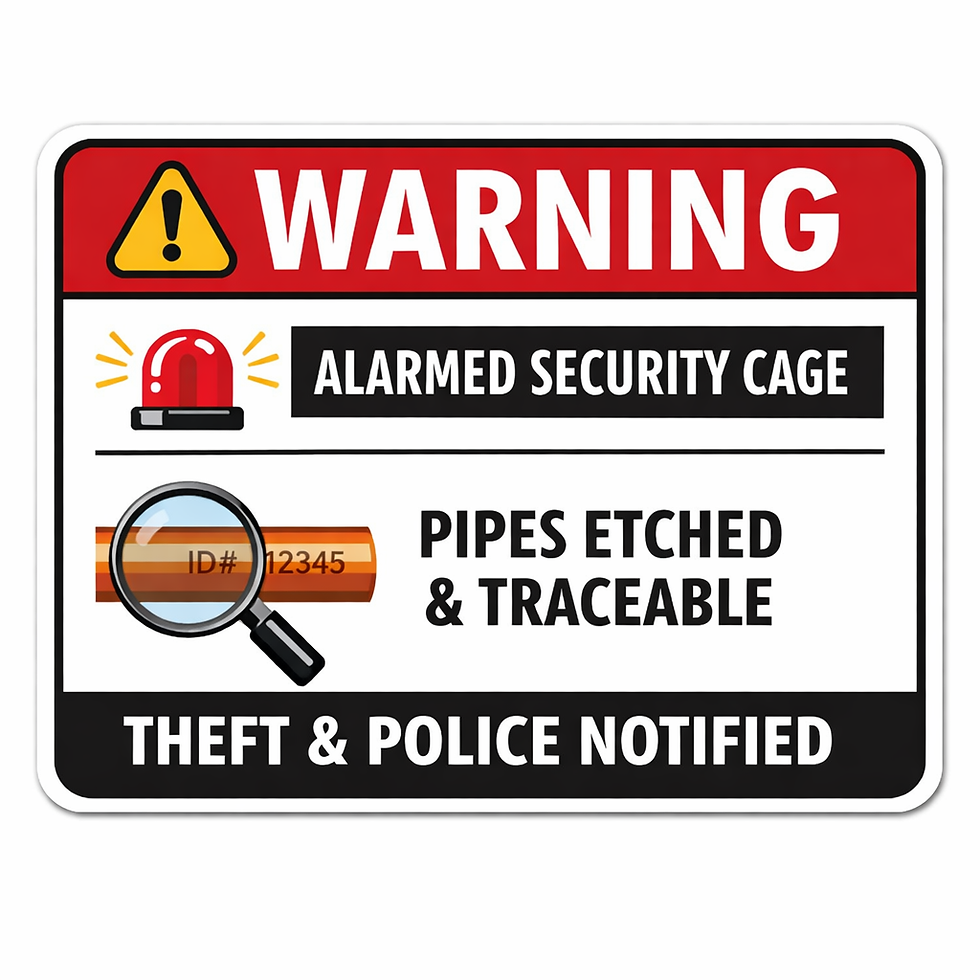
Simple warning signage can further strengthen deterrence. Signs stating that cages are alarmed and pipes are etched and traceable communicate that the equipment is monitored and that theft may lead to law enforcement involvement. Even inexpensive signs can influence opportunistic thieves to move on.
Example signage that you can use:
Insurance coverage is another area that deserves close attention. Many property insurance policies contain exclusions or sublimits for theft of building materials or metal, particularly when items are located outdoors. In some cases, the stolen irrigation backflow itself may not be covered, even if resulting water damage is. Deductibles may also exceed the value of the stolen device, leaving associations responsible for most or all of the replacement cost.
Because policy language varies, associations are encouraged to review their coverage and understand how losses involving exterior irrigation and plumbing components are treated. Knowing these details in advance can help boards make informed decisions about prevention investments.
As copper theft continues to affect communities, property managers and boards are increasingly viewing irrigation backflow protection as a standard risk-management practice rather than an optional upgrade. Relatively small investments in cages, lighting, paint, and signage can significantly reduce the likelihood of theft and the costly consequences that often follow.
Property owners and associations with questions about prevention strategies or insurance coverage are encouraged to contact the Schad Agency to discuss options and ensure their coverage aligns with current risks.
By Devon Schad, President Schad Agency


Comments